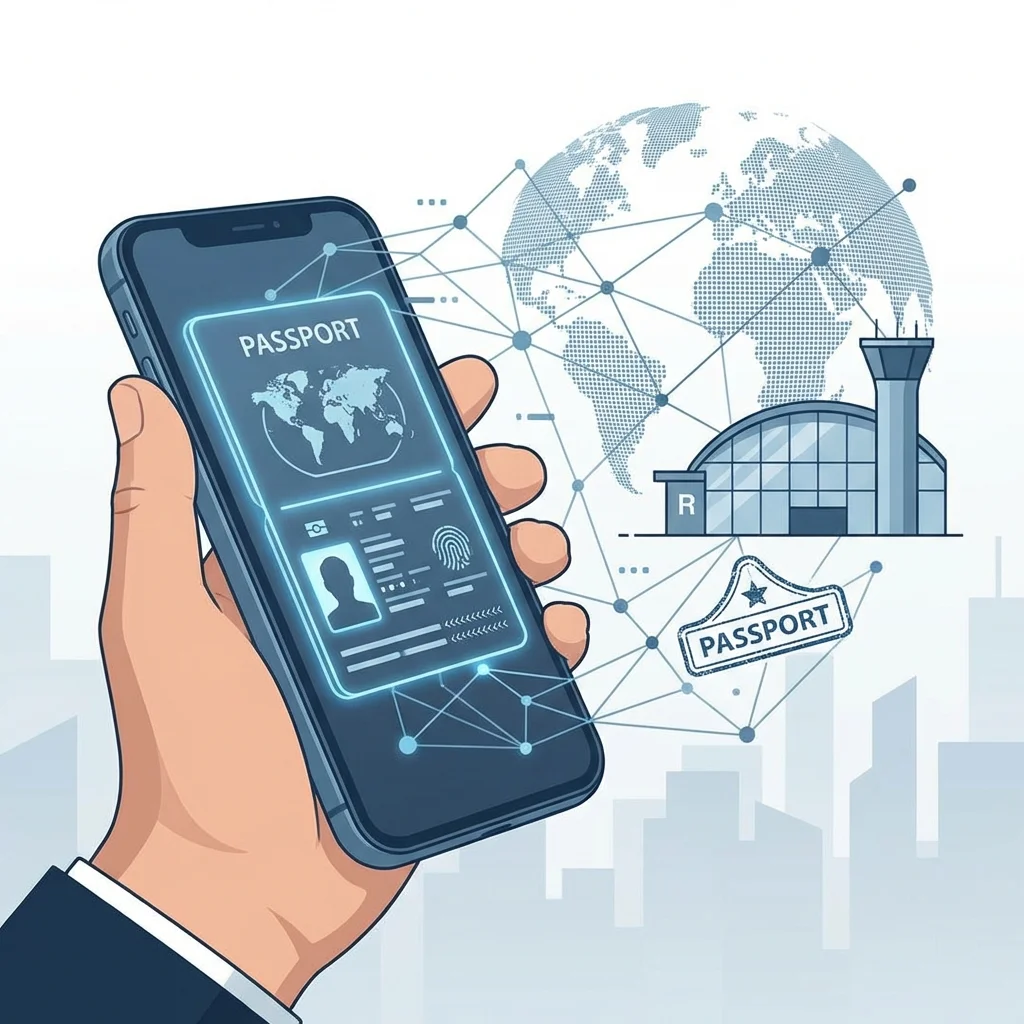
In a landmark shift for the United Kingdom’s immigration infrastructure, the transition to a fully digital ‘eVisa’ model has reached its final implementation phase as of 1 January 2026. This move marks the definitive end of the physical Biometric Residence Permit (BRP) era and signals a new “digital by default” operating standard for documenting the immigration status of millions of UK residents.
The End of the BRP Era
For over a decade, the credit-card-sized Biometric Residence Permit (BRP) served as the primary tangible proof of right to stay, work, and rent in the UK for non-UK nationals. It was a familiar document, physically carried and presented to employers and landlords. However, as of January 2026, the physical card has been effectively retired for all new issuances and is no longer accepted as a standalone comprehensive proof of status for many services. The Home Office has now fully pivoted to an online-only system, where a migrant’s status is held digitally and accessed via a UK Visas and Immigration (UKVI) account.
The Digital By Default Vision
The Home Office’s “digital by default” strategy aims to modernize border security, streamline the immigration experience, and reduce administrative overheads. By removing physical documents, the government aims to eliminate the risks of fraud, theft, and counterfeiting associated with physical cards.
Officials cite cost savings and efficiency as key drivers. A digital system allows for real-time updates to a person’s status—such as a grant of Indefinite Leave to Remain—without the need to manufacture and mail secure plastic cards, a process that historically took weeks. For the visa holder, it theoretically eliminates the panic of losing a BRP card abroad and the subsequent need for a costly replacement visa to return to the UK. However, the reliance on digital availability brings its own set of challenges regarding system uptime and data integrity.
The Transition Timeline
The journey to this point has been staged over several years, with key milestones now passed:
- 31 December 2024: This was the critical cut-off date printed on most BRP cards issued in recent years, regardless of the actual visa expiry date. It marked the technical end of the BRP generation software’s validity and served as the first major deadline for the transition.
- 2025 Grace Period and Rollout: Throughout 2025, the Home Office ran extensive public information campaigns urging BRP holders to create UKVI accounts. During this grace period, physical documents could still often be used in parallel with digital checks, but the emphasis shifted aggressively toward digital adoption.
- January 2026 Full Enforcement: As of this month, the system is fully operational. Physical BRPs are no longer issued. New visa applicants receive only a digital status notification. While expired BRP cards may still be held by individuals as keepsakes or for personal reference, they are no longer valid for proving new rights to third parties.
How the eVisa Works
The core of the new system is the UKVI Account. Visa holders must register for an online account and link their travel document (passport) to their digital immigration status.
Linking Passports and Travel
Crucially, the eVisa is electronically attached to the passport details provided to the Home Office. Applicants must ensure their UKVI account is updated whenever they obtain a new passport. Failure to do so can result in significant delays at the border. Airline carriers now verify immigration status digitally via the Advance Passenger Information (API) system before allowing passengers to board flights to the UK. If the passport presented at the check-in desk does not match the one linked to a valid digital status, boarding may be denied.
The “View and Prove” Service
To demonstrate rights to third parties, individuals cannot simply show a screenshot of their account or the “grant letter” email. Instead, the system relies on a token-based verification process. Visa holders must use the “View and Prove” service on GOV.UK to generate a time-limited share code. This alphanumeric code allows employers, landlords, and universities to verify a specific right (e.g., Right to Work, Right to Rent) securely online via a dedicated employer/landlord portal.
Impact on Employers & Landlords
The shift to eVisas significantly alters compliance procedures for UK businesses and property owners, placing a heavier reliance on technology.
Changes to ‘Right to Work’ Checks
Employers should note that physical document checks for BRPs are now obsolete for updated statuses. The digitized process is mandatory. To establish a statutory excuse against illegal working penalties, employers must obtain a share code from the employee and enter it into the employer checking service on GOV.UK alongside the applicant’s date of birth.
- No Retrospective Checks: Importantly, Home Office guidance clarifies that employers are broadly not required to retrospectively check the status of existing employees who proved their right to work with a valid physical document before the transition, provided that employment has been continuous and the documented leave hasn’t expired. However, for any new checks, extensions, or promotions requiring re-verification, the digital route is compulsory.
Handling Share Codes
Share codes are valid for 30 days. When performing a check, the employer or landlord sees a digital profile including the individual’s photo and rights. They must confirm that the photo matches the individual presenting themselves. To maintain compliance, the reviewer must retain a copy of the profile (usually a PDF or printout from the system) for the duration of employment plus two years.
Common Issues & Troubleshooting
Despite the planned rollout, the permanent switch has not been without friction. Users and immigration practitioners have reported several common issues:
- System Outages: Occasional planned or unplanned downtime of the GOV.UK “View and Prove” service has been reported, causing anxiety for those needing to prove status urgently to secure housing or employment.
- Mismatched Data: Some users have found discrepancies between their historic records and the digital profile, such as incorrect names, wrong dates of birth, or missing leave to remain dates. These data errors require manual correction by contacting the Home Office resolution centre, a process that can take weeks.
- Identity Confusion: Individuals who change their names (e.g., after marriage) face a multi-step process. They must update their passport first, then update their UKVI account. If these steps are out of sync, the digital status may not retrieve correctly.
Steps for Transitioning to eVisa
For those who have not yet transitioned or are encountering issues, the Home Office has outlined the following steps to safeguard immigration status:
- UKVI Account Creation: Individuals who have not yet registered are directed to GOV.UK to create an account using a BRP number, passport, or application reference number.
- Passport Linking: The passport used for travel must be linked to the account. This step is essential for re-entering the UK without disruption.
- Status Verification: Once logged in, individuals can view their digital status to confirm that the details (visa type, expiry dates, work conditions) are correct. Any errors should be reported to the Home Office immediately.
- Share Code Generation: The Home Office recommends that individuals familiarise themselves with the process of generating share codes before they are critically needed for employment or tenancy applications.
- Contact Details Maintenance: The email address and phone number in the UKVI account must be kept current, as these are used for the two-factor authentication required for every login.
Conclusion
The move to eVisas represents a permanent structural change in how immigration status is managed in the UK. While the removal of physical documents promises a more streamlined, cost-effective, and secure system, the onus is now firmly on the individual to maintain their digital administrative footprint. Visa holders must be proactive in managing their UKVI accounts to ensure seamless proof of their rights to live, work, and travel in the United Kingdom.